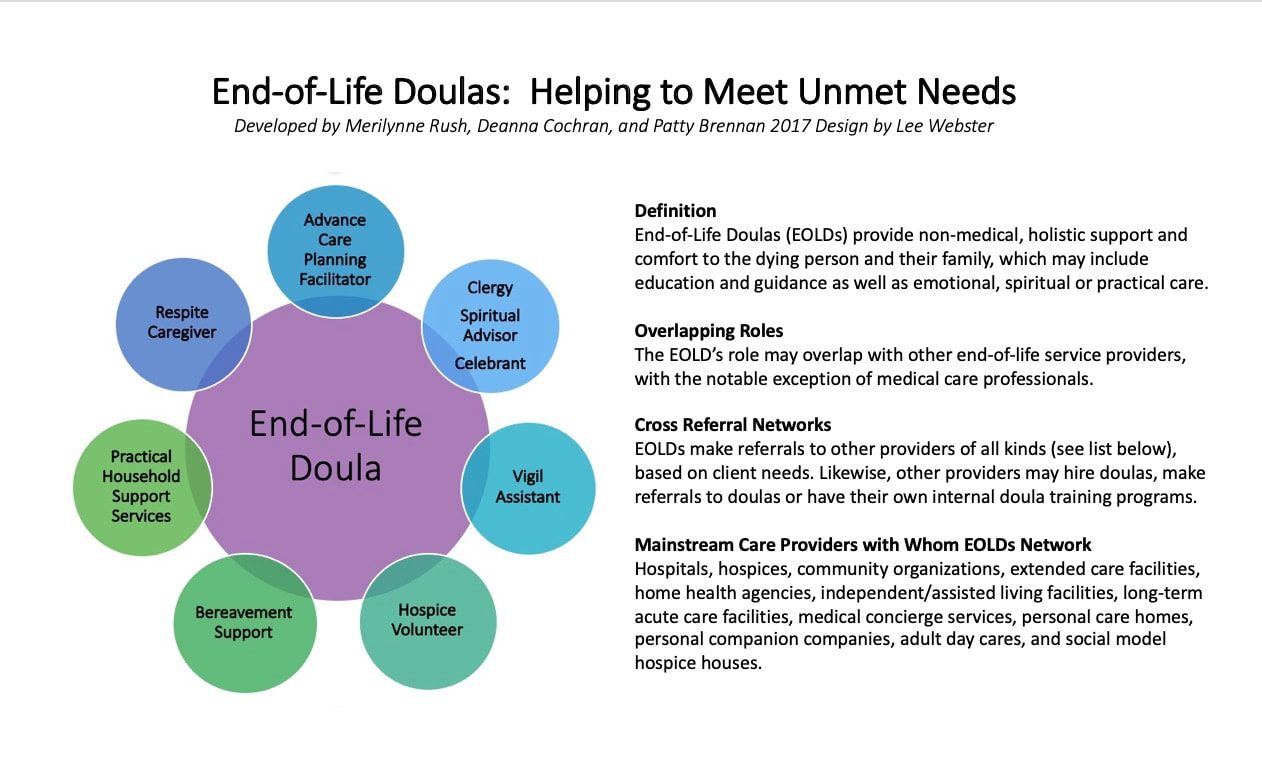
What is an End-of-Life Doula
An End-of-Life Doula provides non-medical services that complement and coordinate with healthcare and hospice providers. The National End-of-Life Doula Alliance (NEDA) describes the scope of an EOL Doula as follows:
An End-of-Life Doula Can Do These Things
- The essence of doula care is to provide non-medical, non-judgmental support and guidance to individuals and families through times of critical, transformative life change.
- EOL doulas nurture, inform, support, guide, empower and comfort.
- EOL doulas work with other caregivers and members of the medical team.
- Doulas foster self-determination in their clients by assisting them in gathering information and encouraging them to make informed choices that are right for them.
- For client needs outside of the doula’s scope of practice, the doula makes referrals to appropriate professionals and community resources.
- Doula support is focused on, and adapted to, the unique needs and requirements of each family served.
An End-of-Life Doula Cannot Do These Things
- As non-medical care providers, end-of-life doulas do not perform clinical tasks (e.g., monitor vital signs, administer medication).
- The doula refrains from giving medical advice or from persuading clients to follow a specific course of action or treatment.
- The doula refrains from imposing his/her own values and beliefs on the client.
- Doulas do not undermine their clients’ confidence in their caregiver(s). Instead, the doula uses good listening skills to support clients who initiate a discussion about dissatisfaction with a caregiver's practice or attitudes.
- Doulas do not usurp the role of other professionals and caregivers such as the hospice nurse, social worker, chaplain, home health aide, etc.